Looking for a Window in a House Made of Walls: MUNA's "Dancing on the Wall" and the anatomy of a loop you can't stop choosing
Words by Matt Keenan
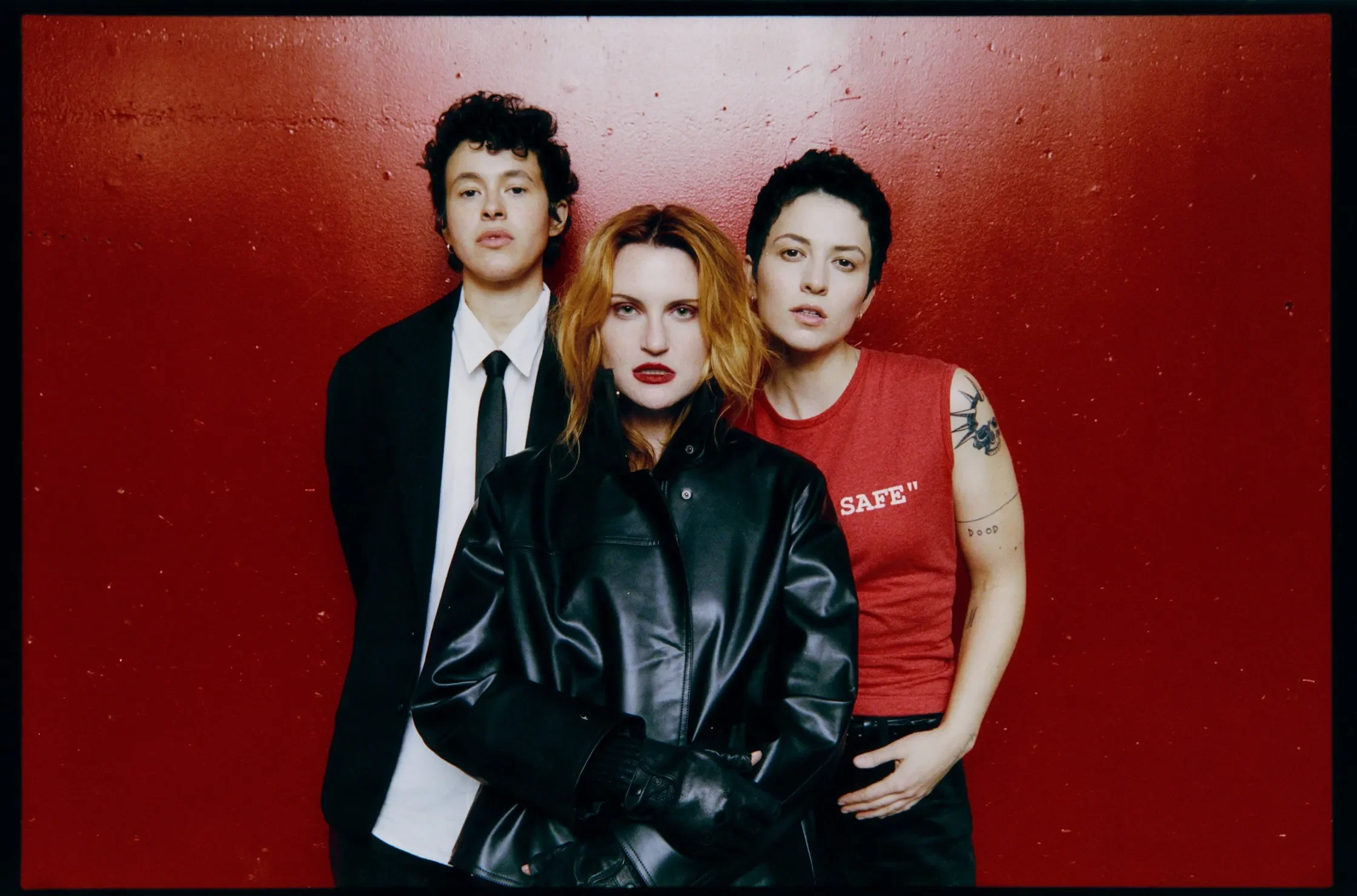
Photo Credit: Dean Bradshaw
You already know this room. The lights are low and the bass is sitting somewhere under your sternum, not quite music anymore, just a fact of the air. You're not quite dancing and not quite standing still. Somewhere in the last hour you stopped thinking about what you look like and started thinking about them — and now you can't stop. You keep circling back. The song changes but the loop doesn't. You know what this is. You've been here before. You order another drink anyway.
This is the room "Dancing on the Wall" opens into. MUNA's lead single off their fourth studio album — out May 8 on Phoebe Bridgers' Saddest Factory Records — arrives wrapped in the synth architecture of the 1980s: the shimmer, the drive, the sense that the floor might actually lift you if you just let it. You hear it and your body responds before your brain does. That gap — between what the music tells your body and what the lyrics are telling your mind — is exactly where the song lives.
The title is doing two things at once, and both of them matter.
The first: to dance on a wall is a physically impossible image. You can't do it. And that's the point — you aren’t dancing with someone, you’re dancing on top of their emotional unavailability, the invisible barrier they've put up. The wall is the person. You’re performing, or almost projecting joy on the very surface of the thing that's blocking you.
The second meaning sits right underneath: you’re also just banging your head against a wall. Same situation, different verbs. And the verb MUNA chose — dancing — is doing all the work. Not screaming. Not waiting. Not breaking. Dancing. That word carries rhythm, agency, even pleasure in it. You’ll probably find some difficulty in attatching the act of dancing to a bad memory.Saying "I'm banging my head against a wall" sounds like defeat. Saying "I'm dancing on the wall" sounds like something you might choose to do. The track manages to somehow live in the gap between those two readings.
MUNA has always been good at that, performing emotionally evocative music that makes you (as Katie Gavin once said when I saw MUNA live “have a moment with a capital m”. The lyrics sharpen this to a succinct point on this single: "I can feel you so close / No more than a stone's throw / Looking for a window / But you're the one that I keep banging my head against." The person is both the distance and the barrier — close enough to feel but structurally unreachable. That's a very specific kind of longing, and the song is built precisely to hold it.
The way this single moves through its own structure mirrors what it's describing, almost like the form is proving the argument.
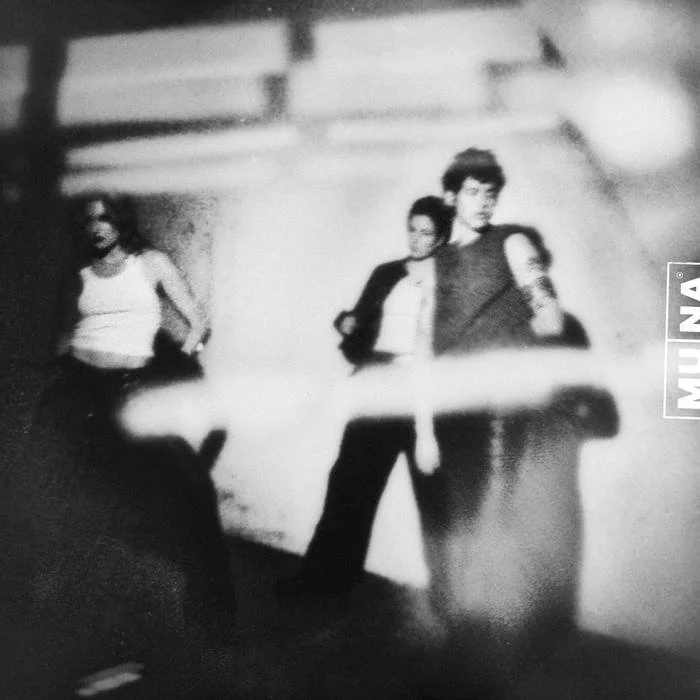
The verses are small and specific — grounded in the kind of mundane, material detail that tells you this isn't the first time. The body already knows the choreography. This has happened enough times to feel like a pattern. Then the chorus opens up and the production follows it outward — synths expanding, the rhythm locking in — and the phrase "I'm dancing on the wall when I'm with you" lands like a release that is also a diagnosis. In MUNA's music, the chorus is always where the truth finally gets said out loud. Here the truth is: I know exactly what this is, and the dancefloor is both where I go to forget it and where I go to feel it more.
The bridge is where the song stops moving forward and starts looking at itself. MUNA described writing it as capturing "the moment the clock strikes midnight at the ball" — and that's precisely what happens. Imagine you're watching the second hand turn. Others are dancing in the light. The Cinderella realization arrives — but not as a surprise. As a recognition. You knew. You were just seeing how long you could make the illusion last.
And then the chorus comes back. You've heard it before. You'll hear it again. The song returns to where it started, but you're not where you started. That's the loop completing itself on the page, doing exactly what the lyrics describe: you keep going back, and each time it lands a little differently.
To me, the most interesting moment in the whole song is quiet. It's the lyric "So what."
Not a question. A shrug. What it means is: I know I'm in this loop. I can see it clearly. And I'm staying anyway.
Most songs about being stuck in a bad pattern have a built-in narrative promise — the bridge will bring the realization, the realization will bring the exit, the exit will bring the catharsis. "Dancing on the Wall" breaks that promise deliberately. The realization arrives in the bridge and nothing changes. The chorus comes back. Awareness turns out not to be the key out. The narrator isn't stuck because she doesn't understand what's happening. She understands perfectly. It just doesn't feel like anything yet.
That's a more honest account of how attachment works than pop music usually allows. We don't usually stay in things because we don't know better. We stay because knowing better hasn't become a feeling yet. The song doesn't judge this. It just maps it.
MUNA — Katie Gavin, Naomi McPherson, and Josette Maskin — have always made music about holding two feelings at once without forcing them to resolve. Their whole catalogue works on the understanding that joy and grief aren't opposites, they're textures of the same experience. The club is where you go to feel both at once because it's one of the few spaces that makes room for both at once.
That's a specific queer emotional grammar, and "Dancing on the Wall" speaks it fluently. Queer club culture has always had a complicated relationship with euphoria — it's a space that had to be claimed specifically because the world outside didn't offer it, which means the joy inside it is never fully separate from the awareness of what's outside. You dance because it matters. Because it's needed. The fact that this song makes you want to move isn't incidental to what it's saying. That's the whole point.
The album arrives in a specific moment too — the band have described it as shaped by the anxious, uncertain energy of living in Los Angeles right now, in a city and a country defined by political tension and a quiet sense of things coming undone. What does it mean to choose euphoria from inside that? What does it mean to keep dancing when the wall inside the song starts to feel like a metaphor that could stretch in several directions? MUNA doesn't answer directly. They leave it open and resonant, which is its own kind of answer.
Produced entirely by McPherson — making this the band's most self-determined record yet — "Dancing on the Wall" sounds like a band who know exactly what they're doing and have stopped asking permission to do it. The 1980s production isn't nostalgic. It's architecture: a proven structure for making devastation feel like movement.
You're still in that room. The lights are still low. The bass is still a fact of the air. The song has cycled back to the chorus — you knew it would — and you're still here, still moving, still watching the second hand turn somewhere above the strobes.
You know what this is. You've always known. The wall isn't going anywhere and neither are you, not yet, not while the song is still playing. The clock will strike when it strikes. Until then you have the floor, the beat, the thing you keep doing even though you know exactly what it is.
You keep dancing.
MUNA's new album is out May 8 via Saddest Factory Records/Secretly Group.