Still Convincing Herself: Sarah Kinsley's Fleeting Is the Sound of Someone Working Up the Courage to Believe It
Words by Matt Keenan
There's a lineage question that follows Sarah Kinsley wherever she goes, and I think she's earned the right to stop answering it. Yes, she grew up playing Chopin and Debussy in youth orchestras. Yes, she studied music theory at Columbia. Yes, she sounds, at certain angles, like Kate Bush filtered through Lorde filtered through Caroline Polachek. People want to locate her in a sort of “musical family tree” — to try and explain her — and I understand it in a sense.. She's the kind of artist who invites that kind of curiosity because her attention to the craft is too visible to ignore.
But Fleeting, her five-track EP out now on Verve Forecast, does something more interesting than displaying lineage. It digests it. And the difference matters.
I recently had the opportunity ahead of the release to attend a press conference where Kinsley got to chat about using her theoretical training to work backwards — starting from emotion and reverse-engineering the architecture. That's not a new idea, but most artists who describe their process this way are at least partially aspirational. With Kinsley, you actually believe it, because the results sound that way: cerebral precision in service of something that feels almost embarrassingly open. Fleeting is the most direct embodiment of that principle she's made yet.
The whole thing runs under eighteen minutes, and it doesn't waste a second.

Lonely Touch
You already know this one — we covered it ahead of release, and it's most likely been rattling around your head since in anticipation for this EP. But hearing it in context of the full EP reframes it slightly. As an opener it functions less like a centerpiece and more like a statement of intent: here is the register we are working in, here is how exposed things are going to get. The '80s synth palette, the question that closes the song (where do I put my heart), the way the chorus swells without quite releasing — it's still extraordinary, but it's also a door into Kinsley’s world that we can’t help but want to enter every time. The four tracks that follow continue to build upon an impressively cognitive dissonance and struggle between feeling and believing.
Truth of Pursuit
I loved this track, it feels like you can hear Pure Heroine-era Lorde in the production's emphatic, intentional crafting — that specific quality of negative space that makes a beat feel enormous — and then Kinsley hits a vocal inflection on the chorus that feels reminiscent ofKate Bush, that breath that turns a note into an event. She's cited both as formative, and there's no attempt to hide the receipts. It’s a courageous lean into influences like I’ve rarely seen before that lives in a world all its own.
This lineage visibility doesn't matter, because what she's built on top of it is distinctly hers. From the lyrics at the heart of this song — the idea of destroying your entire world for the chase of one feeling — isn't Lorde's fatalism or Bush's mythologizing. It's something more reckless and self-aware at the same time, more millennial-twenties in its relationship to its own bad decisions. Kinsley has always been good at writing desire with its eyes open. Here she's writing it with its eyes open and a running start.
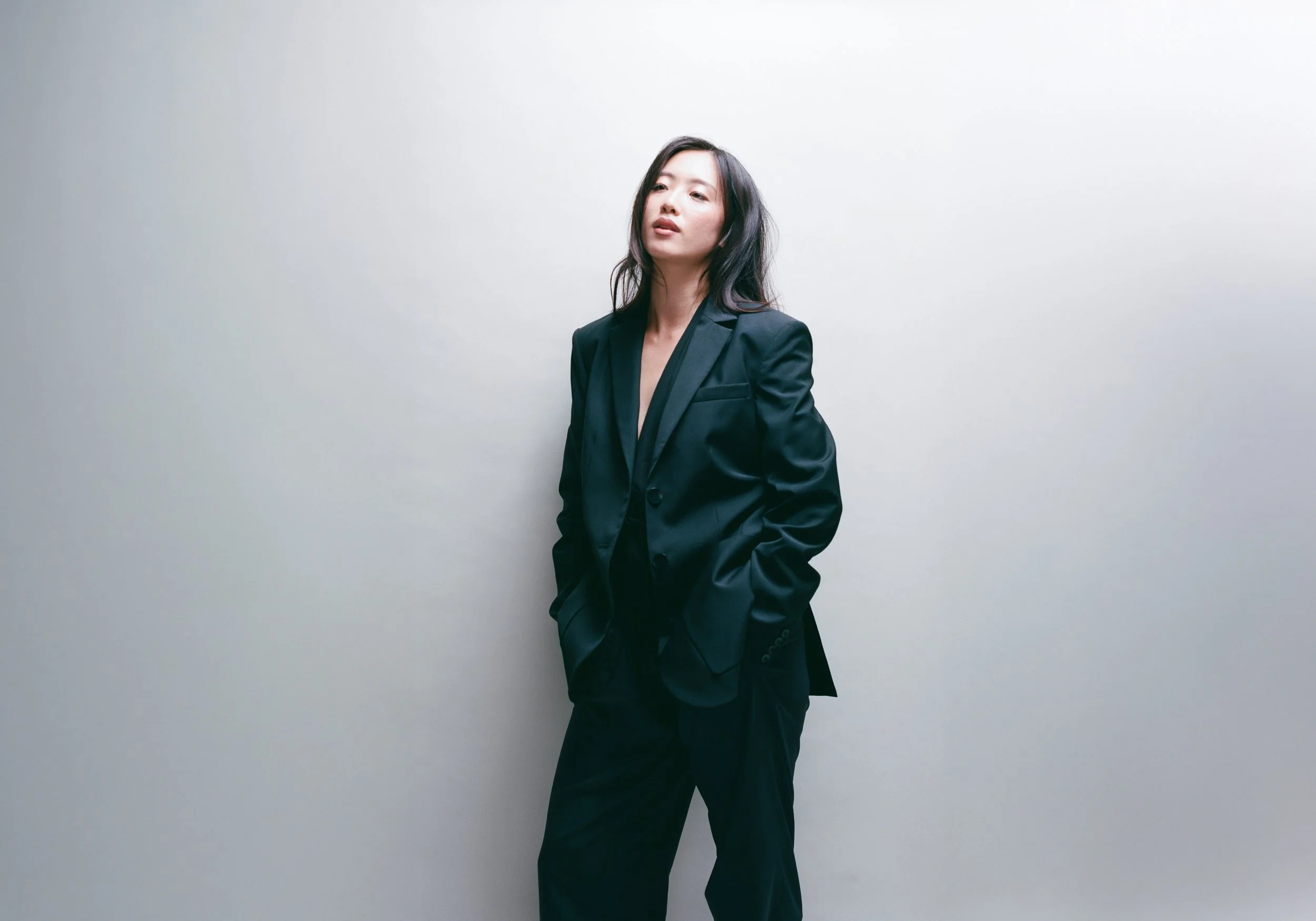
Photo Credit: Florence Sullivan
Reverie
This felt like a pivot point. Kinsley drops the synths and sits down at the piano, and suddenly the Chopin and Debussy training isn't just theory anymore — it's fundamental structure. The arrangement builds from solo piano into something more orchestrated and dense, but it never loses the intimacy of where it started. There's a classically trained patience in how the track develops, a comfort with letting a melody land before complicating it. I really felt my AP music theory class come out from high school, like a memory unlocked I forgot was even there.
The lyric is about trying not to want something too much, about holding yourself back from building a whole imagined life around someone. Hold back when you fantasise, you might go too far and build a life. It's the kind of restraint that Kinsley's vocal delivery understands intuitively — she doesn't oversell it. Kinsley manages to somehow shove emotion between the words themselves, in addition to her vocal delivery without overselling it even still.
After All (feat. Paris Paloma)
Paris Paloma is a different kind of songwriter than Kinsley — her instincts run more towards the plaintive, the directly confessional — and the combination creates a productive friction. Where Kinsley's songs tend to circle around feelings, Paloma tends to walk straight into them. Here they meet somewhere in the middle, over piano and swelling strings, in a song about the specific indignity of still feeling everything for someone after you've already made the decision to leave.
The DIY review compared this to the Lana Del Rey-ification of pop, and I take their point — there's a cinematic quality here that can tip into romanticized melancholy — but I think the Paris Paloma collaboration keeps it grounded in something more human. This isn't longing as aesthetic; it's longing as inconvenience. The feeling that won't cooperate with your decision. Two very precise, very different songwriters writing about the same thing from the same side, and landing on a song that's richer for both of them being there.
Fleeting
The title track is the most pop thing Kinsley has ever made — the one that justifiably draws comparisons to Robyn, to the specific tradition of dance music made to process grief — and it earns every bit of it. The central hook lands with the kind of simplicity that only looks easy: It's not forever, it's just a feeling. Five words. Twenty years of music theory and a youth spent in orchestras and a pandemic spent alone in a dorm room producing pop songs from scratch, and it comes down to that.
The outro — things will turn around, they will turn around, it's not forever, it's just for now — plays like a mantra she's working up the courage to believe. It's not the resigned acceptance of someone who has made peace with impermanence. It's the sound of someone still convincing themselves. That distinction is everything when it comes to understanding this EP.
There's a version of this EP that would have been a showcase — look at all the things I can do, look at all the music I've absorbed and synthesized into my own voice. And sure, Fleeting is that, if you're listening for it. The classical training, the Lorde obsession, the Kate Bush inheritance, the Imogen Heap vocal processing Kinsley shares with a whole generation of women who came up on headphones and GarageBand — it's all traceable, all there.
But what makes Fleeting something more than a showcase is that Kinsley isn't simply performing her influences. She's living inside them, and living past them, and writing from a place that is specifically and recognizably her own. An eighteen-minute EP that somehow contains a complete emotional arc. Five songs that don't sound like anything else you’re listening to right now,sound like everything you loved before, and sound like the same thing all at once.
She learned from the best. Now she's doing something they didn't.
Sarah Kinsley's Fleeting is out now via Verve Forecast. She heads out on a North American and UK headline tour this spring, check out the dates below to see when she’s stopping by a city near you to bring Fleeting to life.