
Everyone Here Belongs Here: MUNA Stuns at Music Hall of Williamsburg Night Three
Words by Matt Keenan
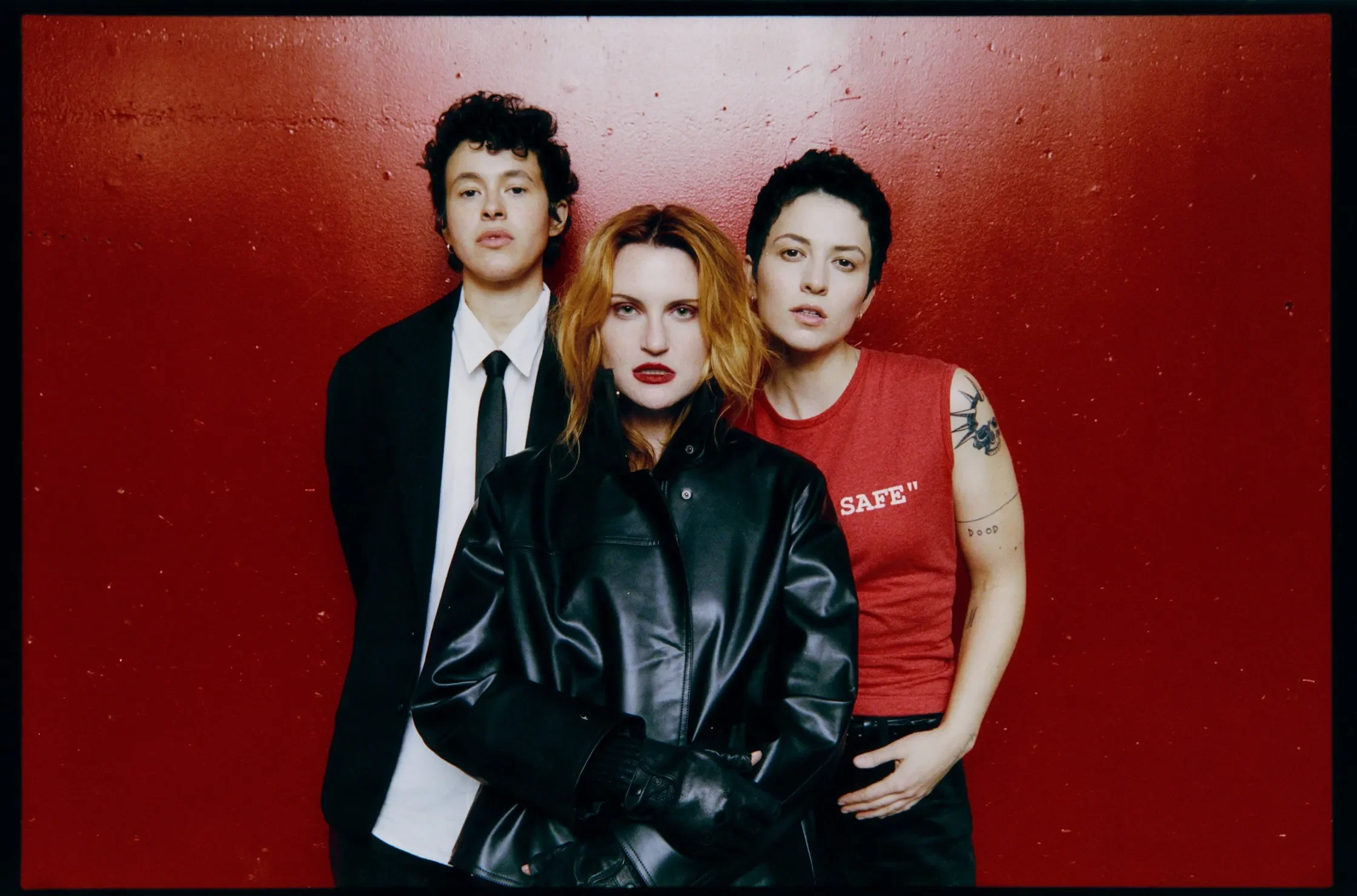
Photo Credit: Dean Bradshaw
MUNA makes more than music, they make memories, and the crowd at a MUNA show isn’t just any old crowd, it’s a community. With magic flowing through the ventricles of every song, MUNA knows how to draw you into their world like no other.
You know the person to your left, maybe not their name, but the way they've been moving since doors opened, the particular energy and atmosphere of someone who has been waiting for this specific Tuesday for weeks is infectious. You know the person to your right because they're wearing the shirt from a previous tour, slightly faded now, which tells you everything.
You know the group of four behind you who arrived already vibrating, already quoting lyrics at each other, the kind of friends who spent the train ride over deciding which song would make them cry first. You haven't spoken to any of them, but you don't need to. The ceiling is low, the lights are lower, and somewhere between the door and the floor, you all silently agreed to be in this together.
This is the room before MUNA even takes the stage.
By Tuesday night, the third of three sold-out evenings at Music Hall of Williamsburg, the room had already been lived in. The album had been out eleven days. That's eleven days of learning the choreography in your kitchen, in your headphones on the L train on the way over, in your apartment at 1am with the volume at a level your neighbors will mention later. Eleven days of turning these songs into something personal before surrendering them back to the room they were built for.
When MUNA walked out, five hundred people screamed like they'd been holding it in for eleven days. Because they had.
The set opened with "It Gets So Hot" and the room didn't wait for a cue. Every word, back from the floor before Katie Gavin had even finished delivering it — this immediate, overwhelming return, like the crowd had been rehearsing its half of the performance in all those kitchens and headphones and 1am apartments, and now they could finally give it back on their big night.
The synths, which are of Naomi McPherson's architecture, all shimmer and drive and the ghost of something '80s, something that knows it's devastating and doesn't apologize for it hit like weather at this volume. The lights caught the smoke, sweat bedazzled t-shirts, and the open mouths of five hundred people singing at full capacity, and for a moment the whole room looked like a photograph of itself, preserved mid-ecstasy.
It didn't let up either, and that's the thing that's hard to explain to someone who wasn't there: the sustained voltage of it. This wasn't a crowd that peaked early and coasted. Every song was met with the same ferocious, total investment. This wasn’t just singing along, but screaming along, not just knowing the words but needing to say them out loud, in this room, surrounded by these people.
MUNA has always had a knack for understanding the dancefloor as a place where the rules are different. The infamous trio’s whole catalogue speaks the grammar of queer club culture, the joy that has to be claimed because the world outside makes you fight for it, which means the joy inside is never fully separate from the weight of what you left at the door. You dance because it matters, and because it costs something. In this room, on this night, you could feel exactly what it cost and exactly why it was worth it.
By the time "Wannabeher" landed in the setlist, the exchange between stage and floor had become something close to overwhelming. The chorus came back and the room came with it, every voice, no exceptions, the sound of five hundred people who had decided that this particular song at this particular moment was going to get everything they had.
The girl beside me had her eyes closed and both hands in the air, mouthing the lyrics at the ceiling like a confession she'd been holding for months. The guy behind me had his arm around a stranger and both of them were grinning with the dazed, you could feel the specific happiness of people who have just remembered something important about themselves.
This is what a MUNA show does that most shows don't: it doesn't give the crowd something to react to. It gives the crowd back to itself.
There’s also the moments between songs, which in lesser hands become the show's soft tissue: necessary, forgettable. In MUNA's hands they're load-bearing. The three of them communicated with the room the way you communicate with people you've known long enough that words would only slow things down — through gesture, eye contact, and the way McPherson and Maskin coaxing the room with the kind of physical generosity that doesn't read as performance, it reads as an invitation.
The whole band faced the crowd at once, not saying a word, just holding the moment — and the room held it back, the same five hundred people who had been screaming every lyric suddenly understanding, without being told, that this was the part where you just felt it.
You could sense the whole accumulated weight of three nights passing through the room in both directions at once: stage to floor, floor to stage, everyone giving and receiving simultaneously, the line between performer and audience blurring until it almost ceased to matter.
"Big Stick" arrived with the low, ominous pulse of a warning issued from the dancefloor: seductive in exactly the way that makes the politics more unsettling. The crowd leaned into it, voices up, bodies moving, because it's different. Not to resolve the tension between pleasure and dread but to insist that both are real, that you can hold both on the floor at once, that choosing to move your body right now is a position and not an escape from one.
The night closed with some favorites like “One That Got Away”, “I Know A Place”, and of course “Silk Chiffon”, the synths stretching until the room felt too small to contain them. Then, with Gavin alone in the light, the crowd was breathing. Shortly after, the beat came back and the crowd back with it, one last detonation, five hundred voices one more time, before the lights came up and the spell broke and everyone remembered they had bodies that would need to go home eventually.
They didn't, though. Not quickly. The crowd dissolved into the Williamsburg night slowly, in clusters, reluctant to be individuals again. On the sidewalk, strangers were still talking. Still in it. Still using the specific present tense of people who haven't decided the night is over yet.
That's the mark. The music ends and what is made between people doesn't end with it, not right away. On Tuesday night in Brooklyn, five hundred people walked in carrying eleven days of private relationship with these songs, and walked out carrying something else — something that had passed through all of them at once and changed shape in the process. MUNA built the room, held the door open, and let everyone inside make it into the thing it needed to be.
The clock struck somewhere around midnight, and nobody left until they had to.